Rochester Radon Mitigation Co.: Radon Mitigation Services in Rochester, Minnesota

Rochester Radon Mitigation Co. is a radon mitigation contractor with over 15 years of experience providing radon mitigation system installation, radon testing, and radon system repair in Rochester, MN. For residential radon mitigation, we install sub-slab depressurization systems that draw soil gas from under the concrete. We seal crawl spaces with airtight membranes and activate passive systems with powered suction. We provide testing and mitigation for commercial, multifamily, and HUD projects. We also advise builders on radon-resistant venting. Work is performed by licensed Minnesota radon professionals, and estimates are free.

AARST-NRPP certification and ANSI/AARST radon mitigation standards guide our work. Those standards are the rules Minnesota health officials hold radon systems to. The 4.0 pCi/L (picocuries per liter) EPA action level is the reading at which the agency recommends fixing a home. We design systems to reduce radon as low as reasonably achievable, with a target below 2 pCi/L where site conditions allow.

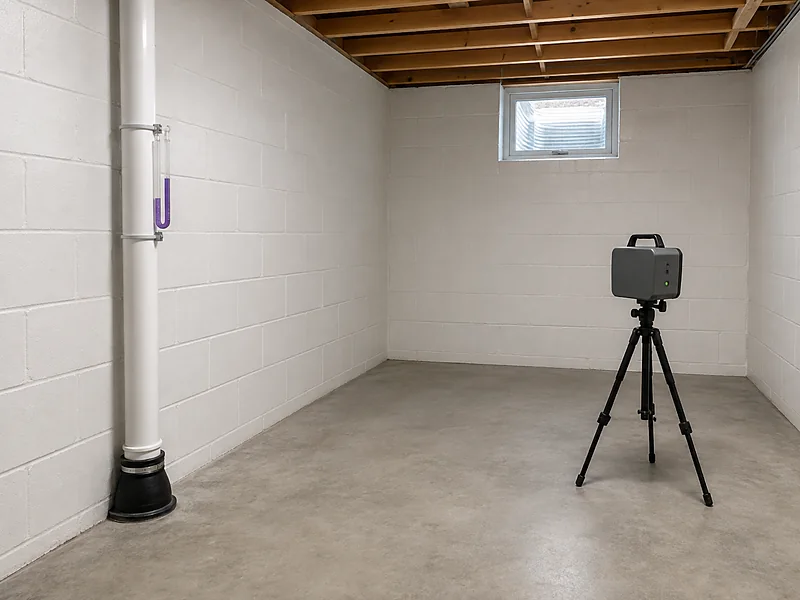
A continuous radon monitor is a calibrated instrument that records hourly radon readings. Every installation includes a 48-hour minimum verification test. We mount a u-tube manometer on every system, a small fluid-filled gauge on the vent pipe whose two columns sit at different heights for as long as the fan is pulling.

Our service area reaches Byron, Stewartville, and Kasson, along with Rochester and the rest of Olmsted County. We design each system from on-site diagnostics and prove its performance with a follow-up test. You receive a system matched to your foundation and a documented result you can keep with the home. Contact us today.

Request a Free Radon Mitigation Estimate

Radon Is a Common Problem in Rochester-Area Homes

Olmsted County reports that roughly half of tested homes are above the 4.0 pCi/L action level. The county has an EPA Zone 1 designation, the agency’s highest radon-potential category. Radon comes from uranium-bearing soil and bedrock beneath the region.

  • Radon gas has no color, odor, or taste.
  • Readings can differ sharply between neighboring houses, so a nearby result cannot predict the level in your home.
  • Elevated radon levels occur in new and older homes, including homes built since 2009 with passive vent stacks.
  • Across Minnesota, about 2 in 5 homes exceed the federal action level.
  • The EPA attributes about 21,000 US lung cancer deaths each year to radon, the leading cause of lung cancer among nonsmokers.

Testing is the only reliable way to learn the radon level inside your home.

EPA Map of Radon Zones for Minnesota Minnesota counties shaded by EPA radon zone. Sixty-eight counties, including Olmsted County where Rochester is located, are Zone 1 — the highest category, a predicted average indoor radon screening level above 4 pCi/L. Nineteen counties in the north and northeast are Zone 2, between 2 and 4 pCi/L. No Minnesota county is Zone 3.
  • Zone 1 — highest potential. Predicted average indoor radon screening level above 4 pCi/L. 68 of Minnesota’s 87 counties.
  • Zone 2 — moderate potential. Between 2 and 4 pCi/L. 19 counties, all in the north and northeast. No Minnesota county is Zone 3.
  • Olmsted County (Rochester) — Zone 1.
County zones from the EPA Map of Radon Zones (https://www.epa.gov/radon/epa-map-radon-zones), developed in 1993. The EPA notes the map should not be used to decide whether an individual home needs testing: all homes should be tested, regardless of zone designation.

Radon Mitigation and Testing Services Across Olmsted County

Our radon services cover homes, rental housing, businesses, and institutional buildings. The work runs from testing and active soil depressurization to repairs and new-construction planning, under the ANSI/AARST protocol that fits each building type.

Sub-Slab Depressurization

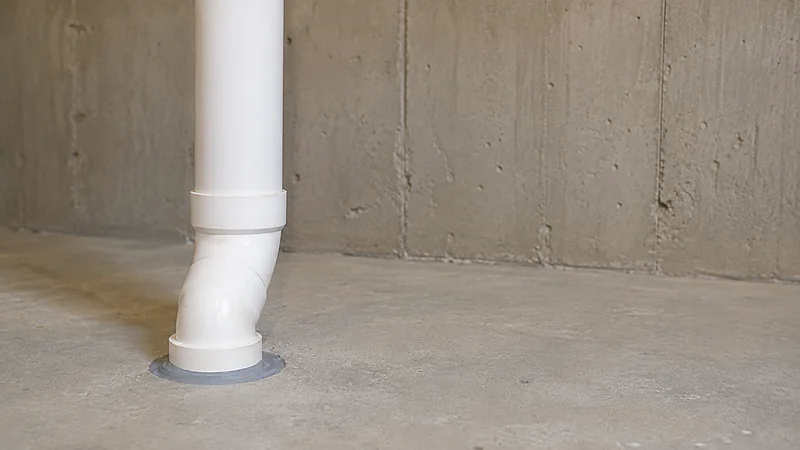
A white PVC radon vent riser sealed where it passes through a basement concrete floor slab

Sub-slab depressurization is the main mitigation method for Rochester homes with concrete slabs or basements. We core a suction pit through the floor and connect it to a sealed schedule-40 PVC riser, a thick-walled vent pipe. A fan draws soil gas from beneath the concrete before it enters the house. One well-positioned point can often treat a connected slab, and reductions of 90% or more are common when air moves freely beneath the concrete.

Radon Testing

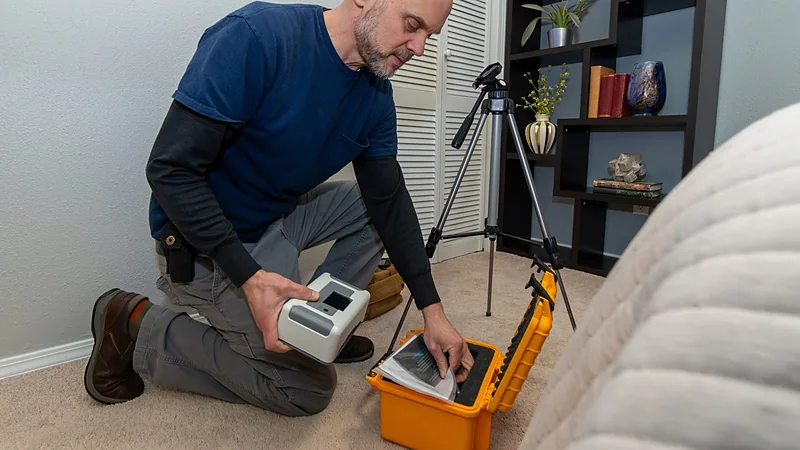
A radon technician setting up a continuous radon monitor in a home

A radon test gives you a measured result before you make decisions about the house. We place a continuous radon monitor under EPA testing protocol and maintain closed-house conditions for a minimum 48-hour test. The hourly log can reveal unusual ventilation or device movement. Short-term devices run 2 to 90 days, and long-term options cover longer windows. We also document real-estate transaction results for closing. We review the report with you and explain the EPA’s 4.0 pCi/L action level.

Crawl Space Radon Mitigation

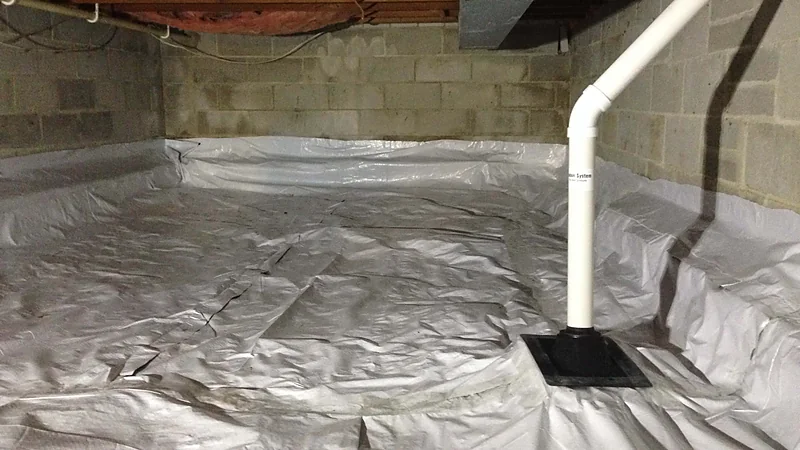
A sealed polyethylene membrane covering a crawl space floor with a vent riser booted through it

Exposed soil in a crawl space gives radon and moisture a direct route into the building, a common setup in the area’s older housing stock. Sub-membrane depressurization covers the soil with a heavy-gauge 6- to 10-mil polyethylene membrane. We seal the seams, boot the membrane around support piers, bond it to foundation walls, and draw suction from beneath it. The finished system limits soil-gas entry while reducing ground moisture in the crawl space. Accessible membrane placement also leaves room for future inspection and service.

Radon System Repair & Fan Replacement

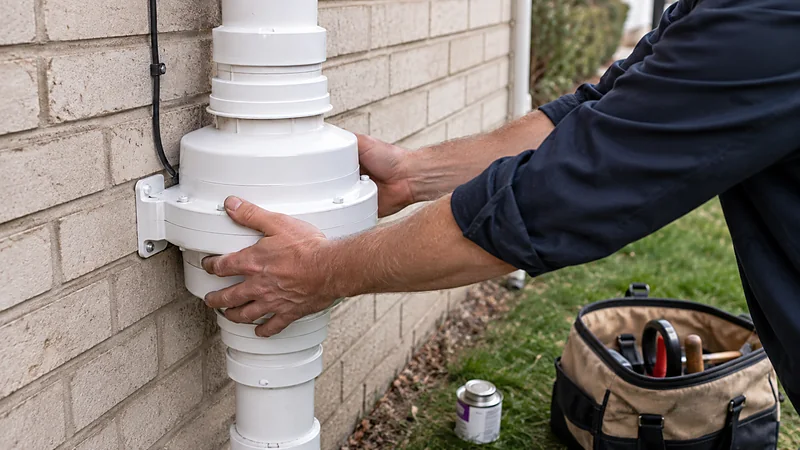
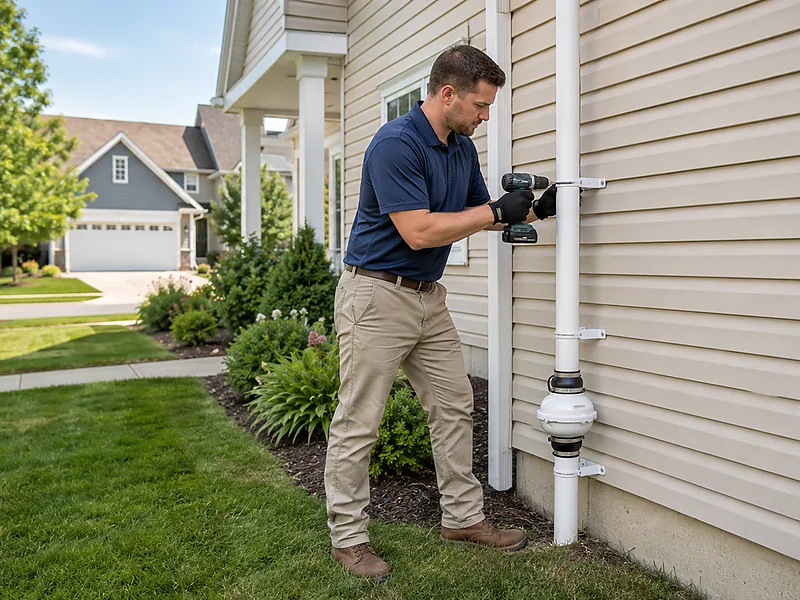
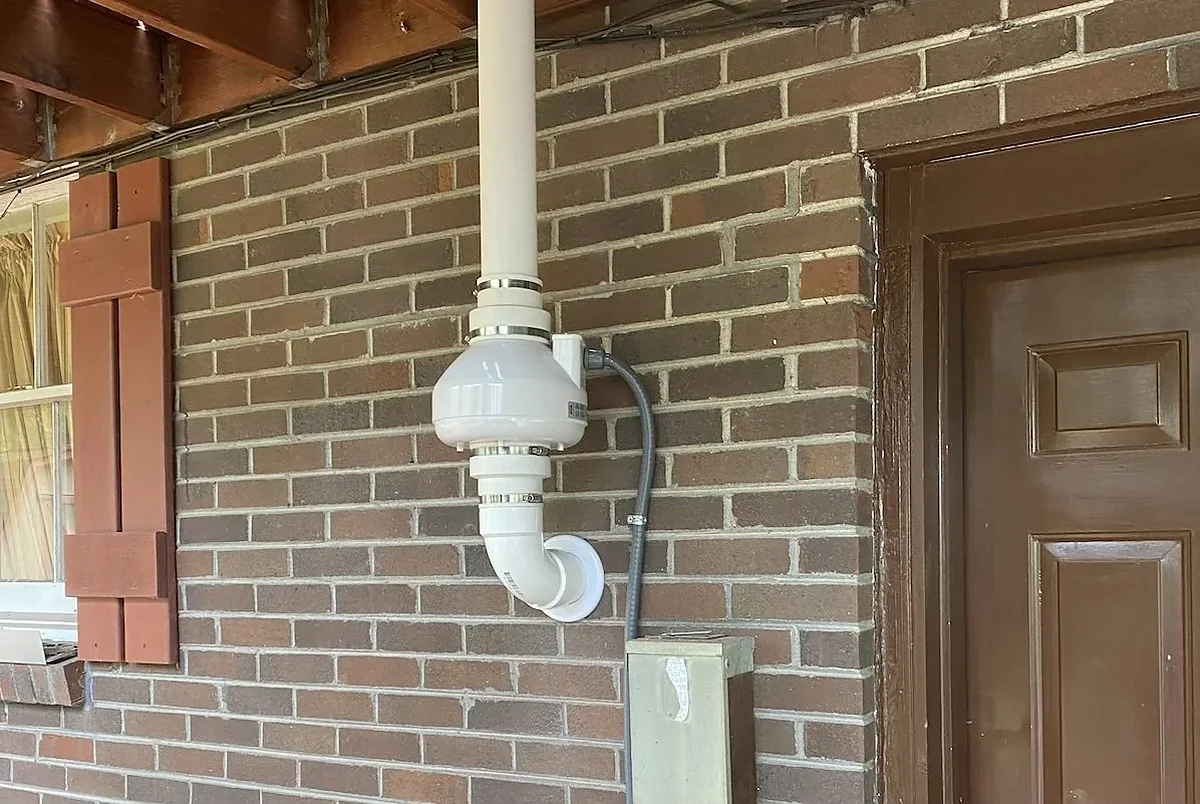
A technician fitting a replacement in-line radon fan to exterior vent piping on a brick wall

Radon system repair restores suction when a fan has failed or the system no longer performs. We diagnose every brand with a u-tube manometer, airflow checks, and static-pressure readings. If replacement is needed, we install an in-line radon fan sized for the existing piping and suction points. We also check vent piping, joints, and the sump seal while we are on site. After a radon system repair or fan replacement, we verify airflow and close out with a verification test.

Radon-Resistant New Construction

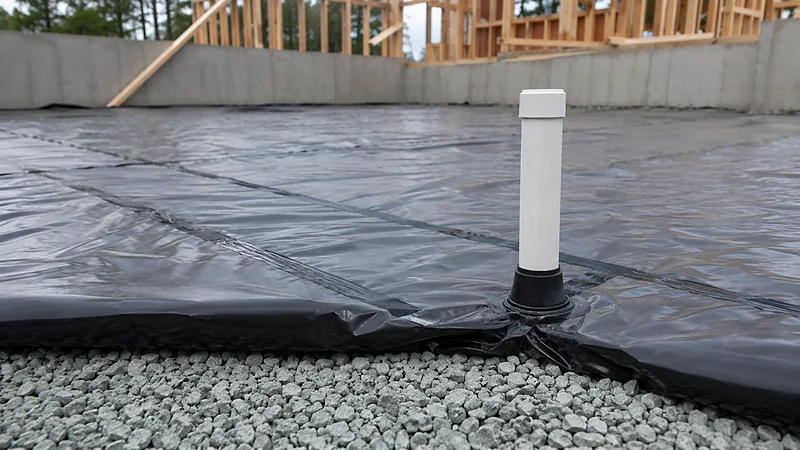
A capped radon vent stub sealed through a soil-gas membrane over aggregate, before the slab pour

Planning for radon during construction places the main components before walls and finishes restrict access. The Minnesota radon-resistant new construction code, adopted in 2009, calls for features such as a 4-inch gas-permeable aggregate layer beneath the slab. A soil-gas membrane limits upward movement, while a vertical vent stack rough-in carries gas toward the roof. We consult with builders and verify the rough-in before concealment. If later testing finds an elevated level, the prepared vent can accept a fan without a full retrofit.

Commercial & Large-Building Radon Testing

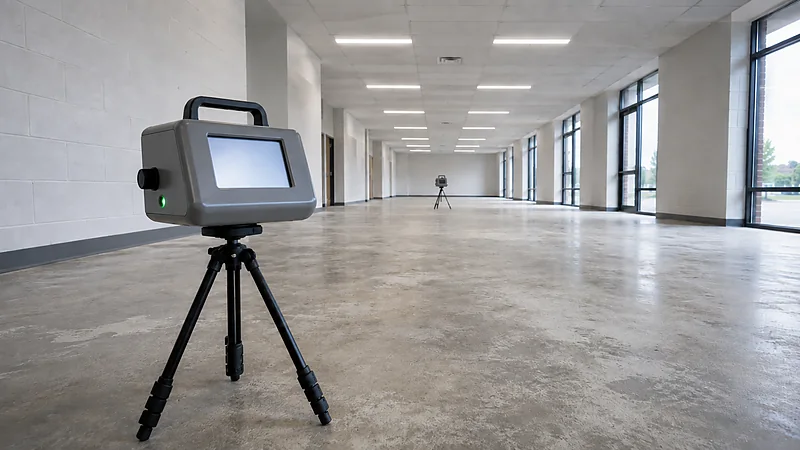
Continuous radon monitors placed on tripods in the ground floor of a commercial building

Large buildings are tested to a different standard than houses. We follow the ANSI/AARST large-building protocol, placing monitors zone by zone across every ground-contact area, and deliver reporting formatted for owners, facility managers, and compliance files.

Radon Mitigation System Installation

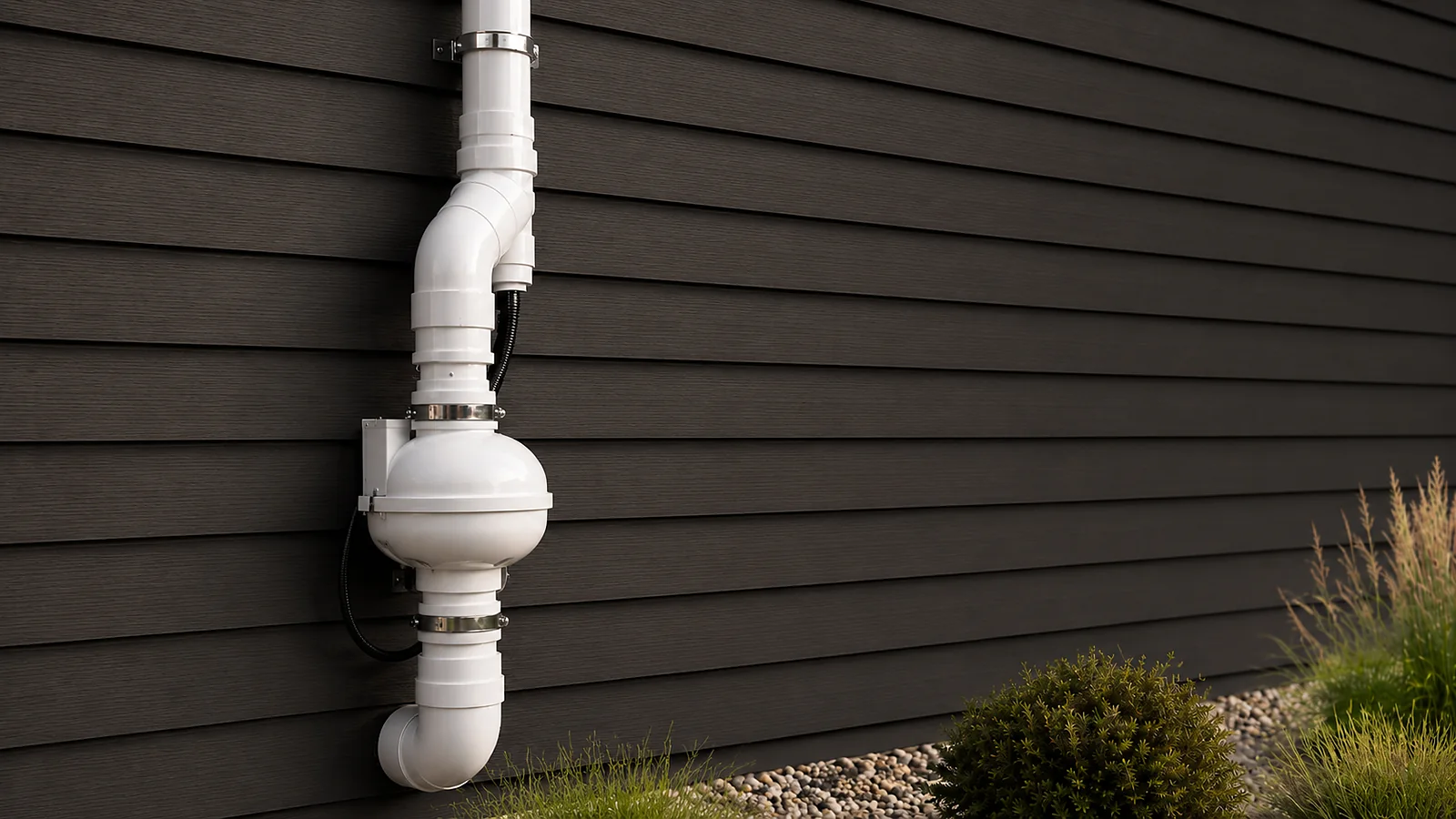
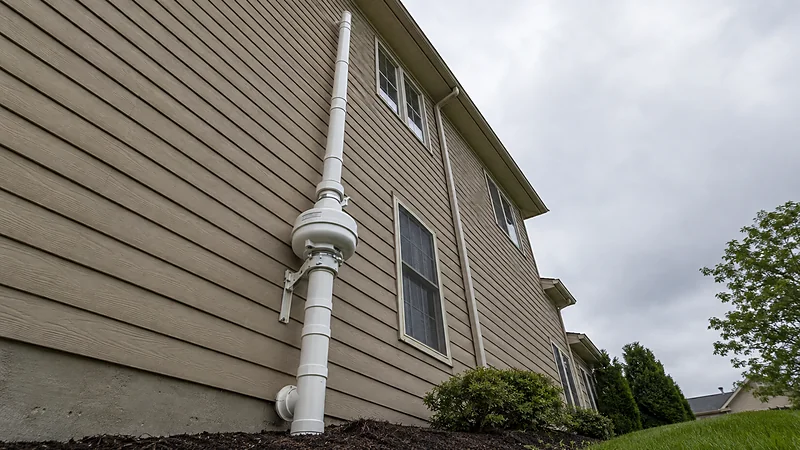
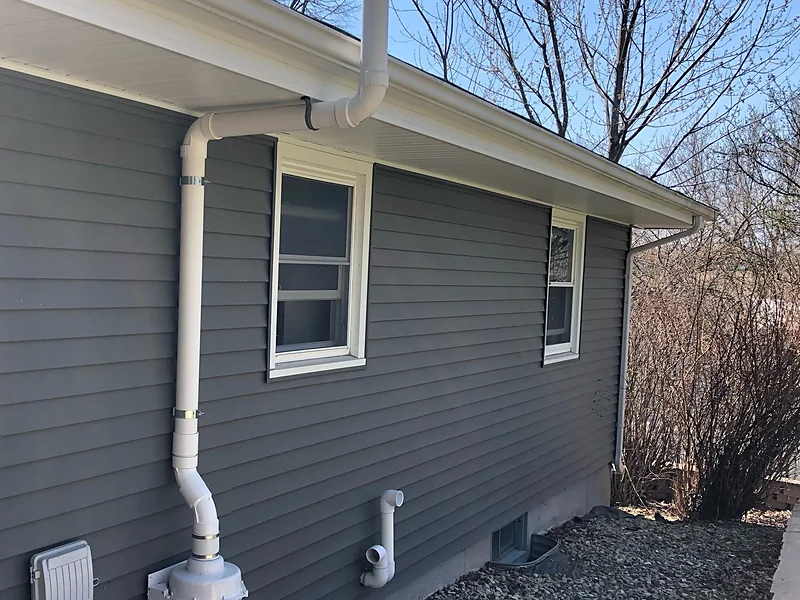
A finished radon vent stack running from grade up an exterior wall past the roofline, with an in-line fan mid-run

A complete radon mitigation system installation covers the whole project, from first diagnostics to handoff. We design the active soil depressurization layout around the home. Vent piping can run through a closet, chase, garage, or along an exterior wall. We seal slab penetrations and fit the Minnesota Department of Health (MDH) system tag before handoff. Roofline discharge maintains 10-foot clearance from windows, doors, and other openings where required. Proper fan sizing and vibration isolation help keep system noise low.

Passive Radon System Activation

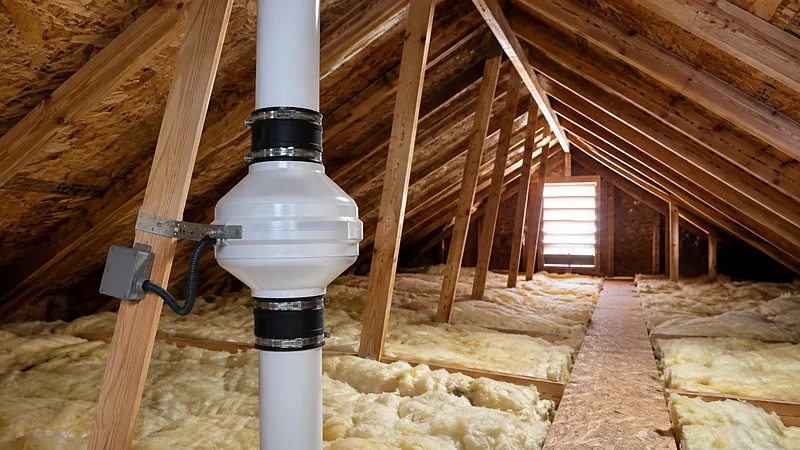
An in-line radon fan coupled into an existing vent stack in an attic, wired to a junction box

A passive vent stack can be converted into a working powered system. Our passive radon system activation includes an in-line fan retrofit, inspection of the existing vent path, and sealing at unfinished joints. Attic fan placement keeps the equipment outside occupied rooms while protecting it from outdoor weather. We also install a pressure monitor so you can check suction at a glance. A post-activation test confirms the result, and many suitable rough-ins can be activated in about half a day.

HUD & Multifamily Radon Testing

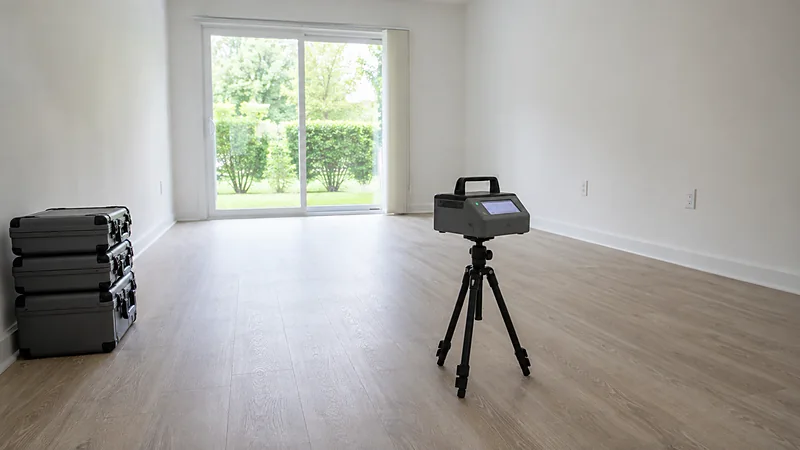
A continuous radon monitor running in a vacant ground-floor apartment unit, with instrument cases waiting nearby

HUD-financed properties carry their own radon rules. We test to the ANSI/AARST multifamily protocol; the 2020 HUD MAP Guide requires 100% of ground-contact units plus an upper-floor sample. Reports are formatted around lender submission deadlines.

Commercial Radon Mitigation

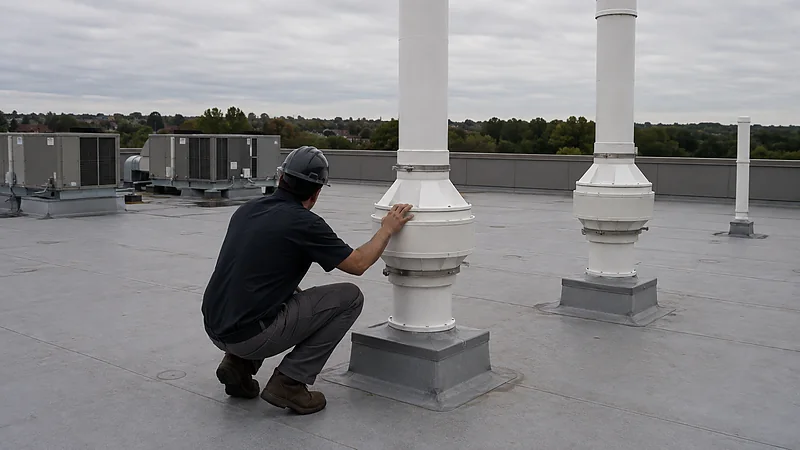
A technician checking one of several high-capacity radon exhaust fans on a commercial rooftop

Commercial slabs require building-specific system design rather than simply scaling up a residential installation. We map the pressure field across slab zones, connect multi-point suction to high-capacity fans, and phase the work around business operations, with documentation for owners and compliance files.

Multifamily Radon Mitigation

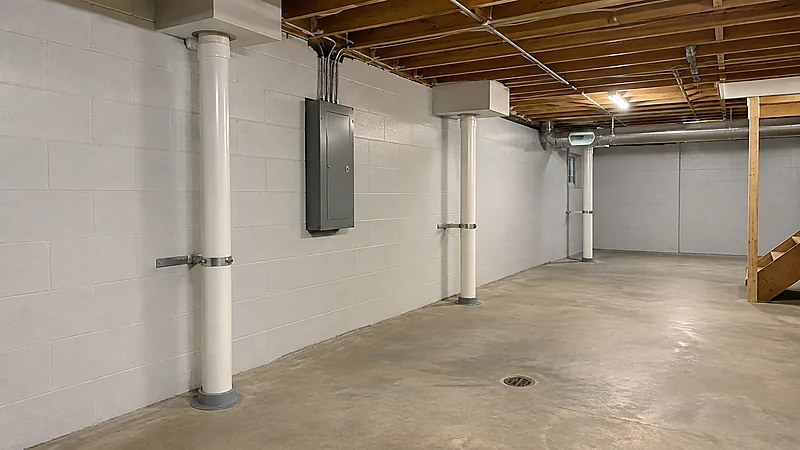
Several radon vent risers rising from the slab of a shared apartment building basement into ceiling chases

Apartment and condominium buildings share one soil footprint. We design to the ANSI/AARST multifamily mitigation standard, route risers through chases with tenants in place, and verify each treated ground-contact unit with its own clearance test.

Why Choose Rochester Radon Mitigation Co. for Radon Mitigation in Rochester?

Rochester Radon Mitigation Co. gives you concrete points to compare among radon mitigation companies, from installer credentials to measured system performance.

A radon technician fastening a pipe strap on an exterior vent riser at a home
  • Our record includes 15+ years in business, more than 1,000 systems installed, free estimates, and a 5-year fan warranty.
  • Minnesota licenses the trade: homeowners may handle their own homes, but professional work requires MDH radon licensure. Our mitigation work is performed by appropriately licensed Minnesota radon professionals.
  • Our radon experts hold AARST-NRPP measurement and mitigation certifications through the National Radon Proficiency Program, and use approved testing devices and laboratories.
  • Every install ends with a verification test; if the reading has not cleared the 4.0 pCi/L action level, we adjust the system and retest.
  • We place the in-line radon fan outside the living space, limit vibration, and route the discharge according to applicable code requirements.
  • Installations follow ANSI/AARST standards, with electrical work permitted and completed by a licensed electrician.
  • Every job closes with the MDH system tag, a completed post-mitigation checklist, warranty documents, a written operation and maintenance plan, and a walkthrough of the manometer reading to expect.
  • Our service continues after installation with troubleshooting, repairs, and fan replacement for any brand of radon system.
  • We inspect the foundation and perform any necessary pressure-field diagnostics before finalizing the system design and written proposal.

Custom Radon Mitigation Systems for Every Foundation Type

Foundation layouts vary across Rochester homes, especially where additions create separate slab areas. MDH guidance notes that foundation type helps determine the appropriate method, and good radon abatement starts with that match. Rochester Radon Mitigation Co. designs each home radon mitigation system around the house we are standing in, then size and route the radon reduction system to fit.

Poured, Block, Slab-on-Grade and Crawl Space Foundations

Poured-concrete basements usually support slab suction with sealed slab penetrations around pipes, joints, and utility openings. Hollow concrete-block cores can carry soil gas upward, so block-wall suction can supplement the slab system. Slab-on-grade homes require careful pipe routing through a garage, utility chase, or exterior wall. Crawl spaces need a sealed membrane over exposed soil. Additions often create disconnected pressure zones, making multi-foundation suction planning essential. We evaluate each foundation area separately and use more than one suction point when the slabs do not communicate.

Suction Methods and System Diagnostics

Sub-slab suction is the default method for most homes. Drain-tile suction uses the perimeter drainage loop as a collection path, while sump-pit suction with a sealed cover turns an airtight pit into the suction point. Sub-membrane depressurization is the crawl-space version. Block-wall suction addresses connected masonry cores when needed.

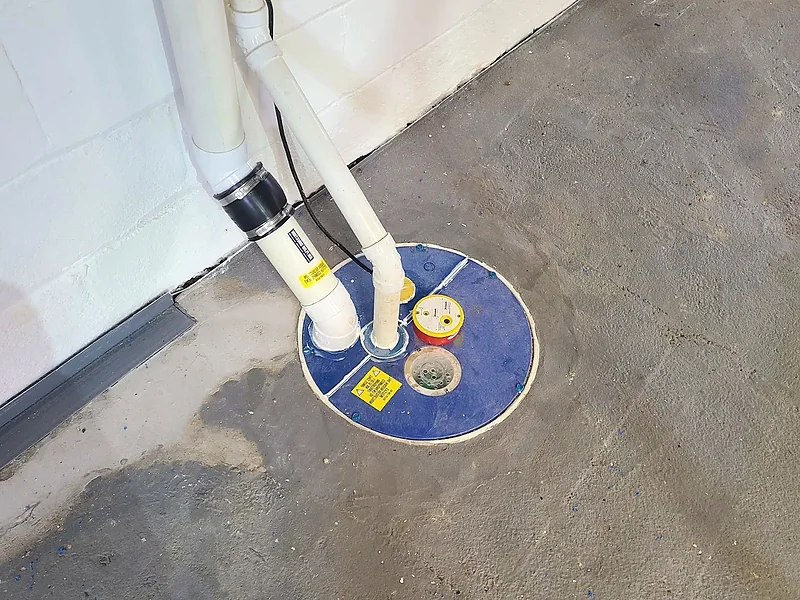
A sealed sump pit lid with a radon vent pipe drawing suction from the pit

Before finalizing a layout, we check how far suction reaches under the slab with a pressure-field extension test, reading a few small test holes with a micromanometer, a fine-scale pressure gauge. The results set suction-point placement, pipe routing, and fan choice. A connected slab usually needs one suction point; isolated slabs may need more.

Active vs. Passive Radon Systems

Both kinds of system use a vent pipe that carries soil gas out from beneath the floor slab and discharges it above the roofline. The difference is whether a fan is pulling on that pipe. A passive stack that has had a fan added is called an active system, and activation is the most common radon job on a newer Rochester home.

Cutaway of a passive radon system: a vent pipe runs from beneath the floor slab up through the house and out the roof with no fan, relying on natural airflow.

Passive System

A vent pipe with no fan, moving air only by the natural pressure difference between the soil and the outdoors.

  • Required by Minnesota building code in new homes since June 2009.
  • Silent, and costs nothing to run.
  • Suction varies with weather and season, so results are not guaranteed.
  • Often will not hold a home below the 4.0 pCi/L action level on its own.
Cutaway of an active radon system: a vent pipe runs from beneath the floor slab, out through the wall above grade, and up the outside of the house to discharge above the roofline, with an in-line fan mounted on the exterior wall pulling soil gas from under the slab.

Active System

The same vent piping with an in-line fan added, running continuously to hold negative pressure under the slab.

  • Reductions of 90% or more are common where air moves freely beneath the concrete.
  • A u-tube manometer shows at a glance that suction is holding.
  • The fan sits in an attic, garage, or outdoors, never in living space.
  • Uses roughly 50 to 90 watts, running around the clock.

Testing is what decides between them. If your home has a capped vent pipe and a reading above the action level, the fix is usually activation rather than a whole new system.

Testing and Post-Mitigation Verification in Minnesota

Reliable measurements bracket the mitigation work. The first reading guides system design, while post-mitigation testing confirms the installed system has reduced radon and provides a baseline for future checks.

Testing Before System Design

Design starts from a number we trust. Seasonal radon variation can affect the result, and heating-season readings often provide a conservative baseline. When a result is old, borderline, or tied to an unknown device, we start over with a continuous radon monitor and let it log a fresh baseline. Closed-house conditions keep windows shut while allowing normal entry, exit, and HVAC operation. The resulting data gives us a sound number for system sizing.

Verification After Installation

The verification test window opens no sooner than 24 hours after the fan starts. We follow a 48-hour minimum test duration and confirm the reading is below 4.0 pCi/L; MDH notes a quality system may hold levels below 2 pCi/L year-round. If the result comes back at or above 4.0 pCi/L, we adjust the system and run the test again until it clears. We document the final result for your property and real-estate files. Retest every 2 years and keep each report with the house papers to track performance over time.

A continuous radon monitor on a tripod verifying a radon riser fitted with a u-tube manometer in a basement

How Much Does Radon Mitigation Cost in Rochester?

Most Minnesota radon mitigation systems cost approximately $1,500 to $3,000, depending on the foundation, routing and number of suction points. Bids may call it a radon reduction system or a radon abatement system; either way, the same factors set the number. Be cautious with unusually low bids. Confirm whether sealing, electrical work, permitting, system documentation and post-mitigation testing are included.

What Moves the Price

A home with one connected slab area usually costs less to address than a house with several foundation areas, crawl spaces, or additions. Existing drain tile, sump configuration, suction point count, and the need for a sealed sump cover also affect the scope.

Finished-basement concealment routing takes more labor than an exposed pipe run in an unfinished utility space. Routing inside the house or up an exterior wall, fan requirements, electrical access, and the electrical permit also influence the final number.

What a Complete Proposal Includes

A written proposal scope should identify the system installation, fan, piping, sealing work, and licensed electrical work. It should also cover warranty terms, MDH documentation, and a 48-hour post-mitigation test. Licensed electrical work typically adds $350 to $450, including the permit. Every professional Minnesota installation also carries a $75 MDH system tag fee.

Compare bids by the work included as well as the total. Missing testing, electrical work, sealing, or documentation leaves you with a smaller scope and added costs later.

A complete exterior radon system on a home, running from the wall penetration past the fan and up above the roofline

What It Costs to Run

The monthly cost of a radon mitigation system is usually modest. A continuously running fan draws about 50 to 90 watts, which costs roughly $5 to $10 per month at typical residential electricity rates.

The system exhausts a small amount of conditioned air with the soil gas, so winter heating use can rise slightly. Thorough sealing around sumps, cracks, and pipe penetrations keeps conditioned-air loss low.

Our Radon Mitigation Installation Process

Rochester Radon Mitigation Co. keeps your radon mitigation installation simple from the first call through the final test result. You receive a defined scope and an explanation at each step.

  1. 1.

    Review Your Radon Results

    We confirm the readings, test conditions, and rooms tested. We may provide a preliminary price range by phone. A firm written proposal follows the property inspection and any diagnostics needed to finalize the system design.

  2. 2.

    Inspect the Property

    We examine the foundation, sump pit, drain tile, crawl spaces, and practical pipe routes. You can review placement options before approving the installation plan.

  3. 3.

    Perform System Diagnostics

    When the slab requires diagnostic readings, we use them to confirm suitable suction-point locations and fan performance. We then finalize the proposed system layout.

  4. 4.

    Install the System

    Our crew installs the suction point, vent pipe, fan, u-tube manometer, and specified sealing. Most residential installations are completed in one day.

  5. 5.

    Complete Licensed Electrical Work

    A licensed electrician powers the fan. We arrange the electrical permit and inspection when required for contractor-installed equipment in Minnesota.

  6. 6.

    Verify System Performance

    We explain the controls, warranty, and maintenance documents, and a verification test provides the final radon reading.

Start with a call to (507) 512-7678 to discuss your results and estimate.

Call Now: (507) 512-7678

Signs Your Existing Radon System Needs Service

A radon system can fail quietly. A healthy fan hums faintly around the clock; silence, grinding, or vibration means trouble. Fan life varies by model and operating conditions, although an older, noisy or nonfunctioning fan should be inspected. Check the u-tube manometer: fluid resting level on both sides means the system has lost suction. Damaged or gurgling vent piping, an unsealed sump lid, and remodeling that cut into the system are the other common culprits. If you are buying a home with an existing system, request an inspection and a current radon test first.

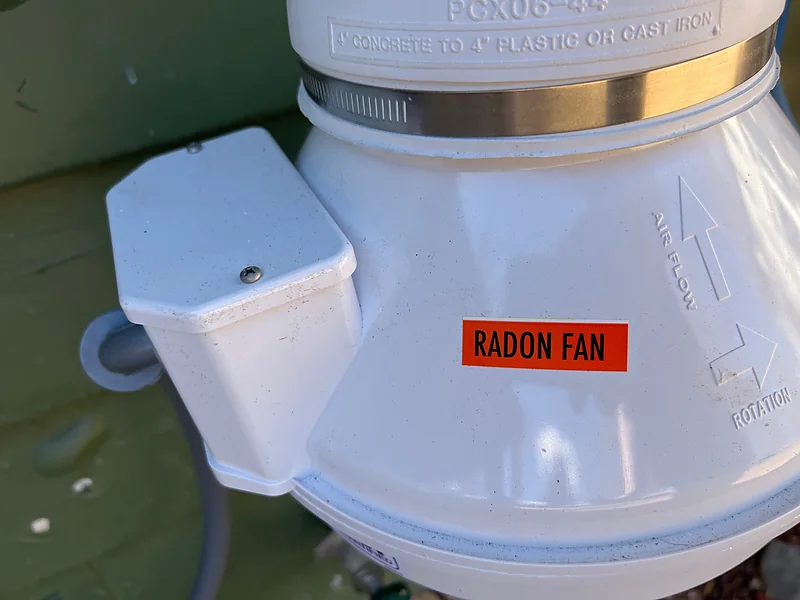
Close-up of a radon fan housing showing its RADON FAN label and moulded air-flow arrow

Activating Passive Radon Systems in Minnesota Homes Built Since 2009

Minnesota building code has required a passive vent stack in new homes since June 2009: a radon vent system with no fan, visible as a capped or labeled PVC pipe running from the basement floor through the roof. Passive stacks rely on natural airflow and may not create enough suction to keep radon below the recommended action level. Test the house first; if the reading is high, activation adds the fan.

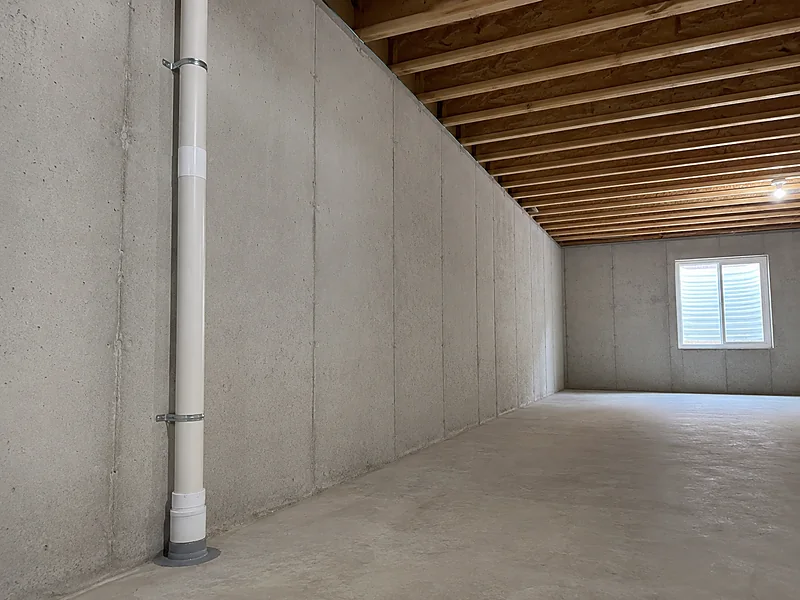
A capped passive radon vent stack with no fan, rising from a sealed basement floor penetration

How Minnesota Winters Affect Radon Systems

Properly installed radon fans are designed for continuous year-round operation, including Minnesota winters. We prefer attic routing because moist soil gas condenses and can freeze inside an exterior riser, choking airflow. When an outdoor run is unavoidable, we insulate the pipe and pitch it so moisture drains back toward the suction point. Gurgling after a hard freeze is worth a call.

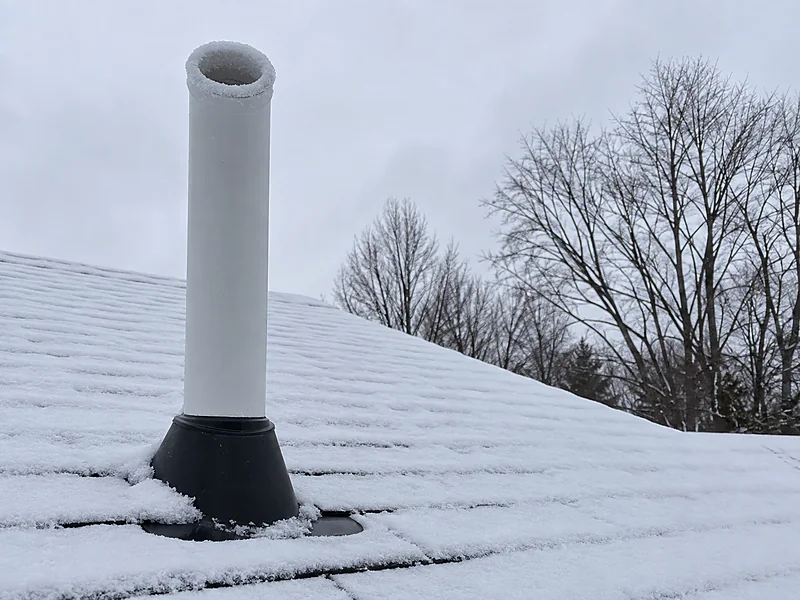
A radon vent stack discharging above a snow-covered roof, its rim edged with frost

Radon in Well Water Around Olmsted County

Rural homes on private wells have a second radon pathway: groundwater carries dissolved radon indoors, where showers and laundry release it. As a rule of thumb, 10,000 pCi/L in water adds about 1 pCi/L to air. Soil gas beneath the home is usually the primary source of indoor radon, although private well water can contribute in some properties. Test the air first; for well homes that stay elevated, Rochester Radon Mitigation Co. can arrange water testing, with aeration or carbon filtration as the treatment options.

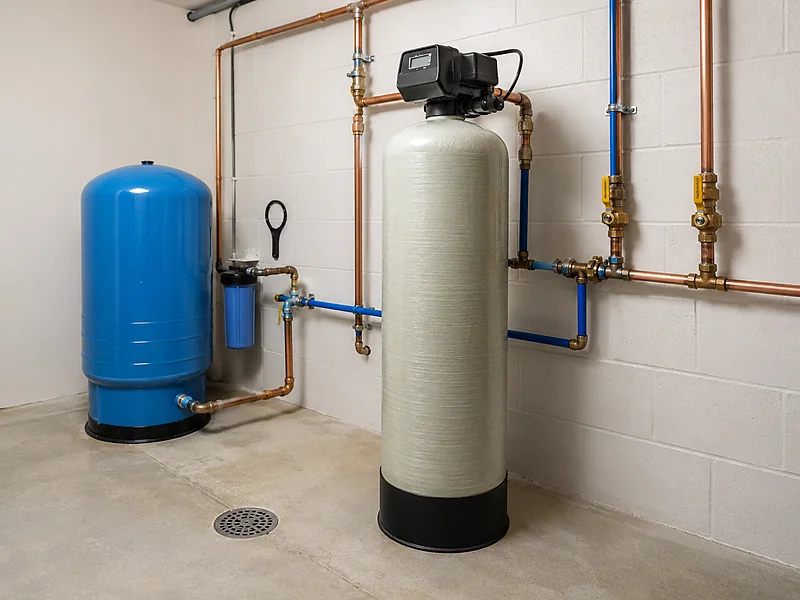
A private well pressure tank and carbon filtration tank in a home utility room

Selling a Rochester Home? Radon Rules and Records

The Minnesota Radon Awareness Act (Minn. Stat. 144.496) requires sellers to disclose known radon levels, test records, and any mitigation system in writing before a purchase agreement, along with the state radon publication. Buyers usually test during the inspection window anyway. A tagged, verified system answers the question before it is asked, and a pre-listing test heads off a mid-transaction scramble.

Radon Mitigation in Rochester and Southeastern Minnesota

Downtown Rochester, Minnesota at dusk seen from above

Rochester anchors southeastern Minnesota, and its housing stock spans every era of foundation construction. Older homes near the center of the city sit alongside new subdivisions at its edges, and the mix brings basements, slabs, crawl spaces, and mixed-foundation layouts.

Olmsted County’s limestone bedrock, karst geology and long heating season contribute to the area’s elevated radon potential. Closed-up houses concentrate soil gas from fall through spring, making home radon mitigation important across southeastern Minnesota. Our broader service region reaches roughly 30 to 35 miles out from Rochester, taking in Byron, Stewartville, Kasson, Pine Island and Oronoco, along with Eyota, Mantorville, Dodge Center, Chatfield, Plainview, Zumbrota, St. Charles, Spring Valley and Lake City.

Rochester Neighborhoods We Serve

Rochester Radon Mitigation Co. serves neighborhoods across the city, covering historic homes near downtown, established residential areas, and newer developments along Rochester’s expanding edges.

  • Historic Southwest
  • Pill Hill
  • Folwell
  • Kutzky Park
  • Elton Hills
  • Country Club Manor
  • Cimarron
  • The Manor
  • Eastside
  • Slatterly Park
  • Sunnyside
  • Bamberwood
  • Baihly Meadows
  • Foxcroft
  • Scenic Oaks

Communities Near Rochester We Serve

  • Byron
  • Stewartville
  • Kasson
  • Pine Island
  • Oronoco
  • Eyota
  • Mantorville
  • Dodge Center
  • Chatfield
  • Plainview
  • Zumbrota
  • St. Charles
  • Spring Valley
  • Lake City

What Rochester Customers Say

Frequently Asked Questions

What Radon Level Requires Mitigation?

The EPA and MDH recommend mitigation at 4.0 pCi/L. Minnesota also advises considering action between 2 and 4 pCi/L because even lower, long-term exposure carries some health risk.

How Does a Radon Mitigation System Work?

A continuously operating fan draws radon-laden soil gas into vent piping and releases it above the roof. A u-tube manometer displays the pressure difference that confirms suction.

How Long Does Radon Mitigation Installation Take?

Crews usually complete a single-family installation within one working day. A verification test runs for at least 48 hours afterward to document the reduced radon level.

Where Will the Radon Pipe and Fan Be Installed?

The fan sits in an attic, garage, or outdoors, away from occupied rooms. Piping can follow an interior chase or exterior wall and must discharge above the roofline, clear of openings.

How Soon Should I Retest After Mitigation?

Begin verification at least 24 hours after startup and test for 48 hours or longer. Retest every two years, save each report, and consider winter testing for a conservative reading.

Does a Radon Fan Run All the Time?

Yes. The fan operates continuously to maintain negative pressure beneath the foundation. Most units use about 50 to 90 watts, and the manometer helps you spot lost suction.

Can Radon Enter Through a Sump Pit?

Yes. An uncovered sump gives soil gas a direct route indoors. An airtight lid blocks that opening, while a sealed pit can also serve as an effective system suction point.

Get a Free Radon Estimate in Rochester

Rochester Radon Mitigation Co. serves homes across Rochester and Olmsted County. Contact us today, and share your address along with any readings you have. We will review your existing results or schedule testing if a current reading is needed. Your free estimate includes a written proposal with the scope and price.